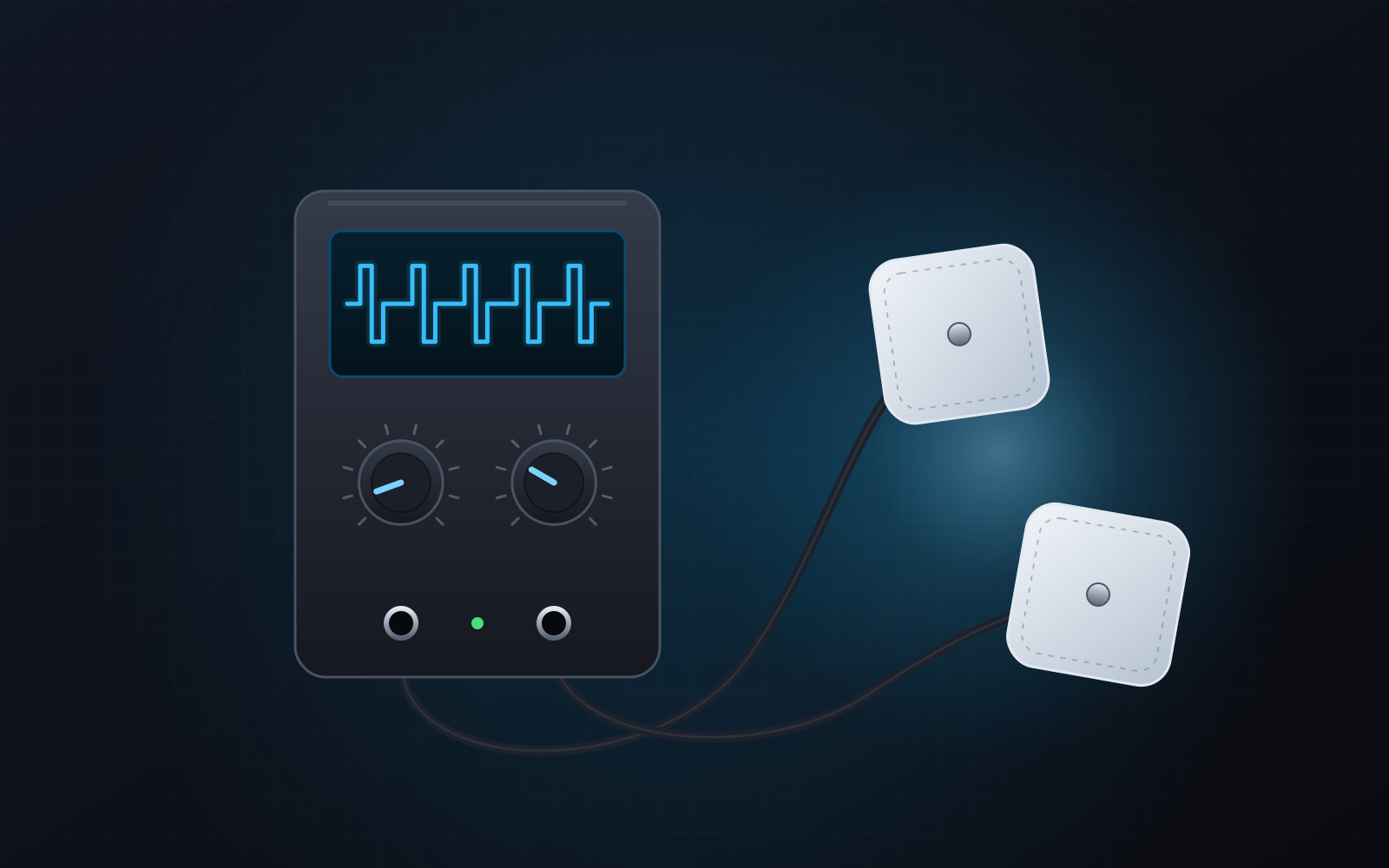
E-stim is short for electrical stimulation: using small, controlled pulses of electricity to stimulate nerves and muscles through the skin. The same idea is used in pain-relief TENS machines and muscle-toning EMS units. It's also used recreationally by adults, for sensation and for erotic play, with units made for that purpose. This series covers how the equipment works and how to use it with care.
What it feels like#
At low levels most people feel a light tingle or a gentle tapping. Turn it up and that becomes a stronger buzz, a pulsing or squeezing feeling, and eventually the muscles under the electrodes start to tighten and release on their own.
The sensation depends on three things:
- the settings: how strong, how fast and how long each pulse is
- the electrodes: their size, what they're made of and how well they touch the skin
- the placement: where on the body the current passes
Change any one of them and the same unit can feel completely different. Pulses, Frequency and Waveforms explains the settings.
The basic kit#
You need four things:
- A power unit (often called a power box or control box) that makes the pulses. See TENS, EMS and E-Stim Units.
- Leads that carry the output from the unit.
- Electrodes, the parts that touch the body. Sticky pads are the usual starting point. See Electrode Types.
- Conductive gel, for any electrode that isn't a self-adhesive pad. See Conductive Gel and Lubricant.
One idea to understand first#
Electricity needs a complete loop. Every output channel on a unit has two connections, and you only feel something when both are touching the body. The current then flows through you from one electrode to the other.
That's why placement matters so much. The current goes through whatever lies between the two electrodes, so you choose where it goes by choosing where they sit.
The rules to learn before anything else#
1. Keep it below the waist. Never place electrodes so that current could pass through the chest, where it can disturb the heart. That means nothing on the chest, and never one electrode on each arm. Nothing on the head or neck either. Where Electrodes Can and Can't Go covers this properly.
2. Some people shouldn't use it at all. Don't use e-stim if you have a pacemaker or any other implanted electronic device, a heart condition or epilepsy, or if you're pregnant, unless your doctor has told you it's safe.
3. Only use equipment made for the body. That means a battery-powered TENS, EMS or purpose-made e-stim unit from a reputable maker. Never anything home-made or mains-powered without proper isolation.
4. Start at zero, every time. Turn the level right down before you switch on, and bring it up slowly.
5. Turn it down before you move anything. Shifting or removing a live electrode can give a sharp sting.
The full list is in E-Stim Safety. Please read it before your first go.
Where to go next#
- Choosing Your First E-Stim Unit if you haven't bought anything yet.
- Your First E-Stim Session for a step-by-step first try.
- How an E-Stim Unit Works if you want to know what's inside the box.
- The E-Stim Glossary for any word you don't recognise.
Nothing on this site is medical advice. If you're not sure whether e-stim is safe for you, ask a doctor first.